Selected work · 05
VEX
ROBOTICS.
A robotics competition run where iteration, controls, strategy, and pressure testing had to converge.
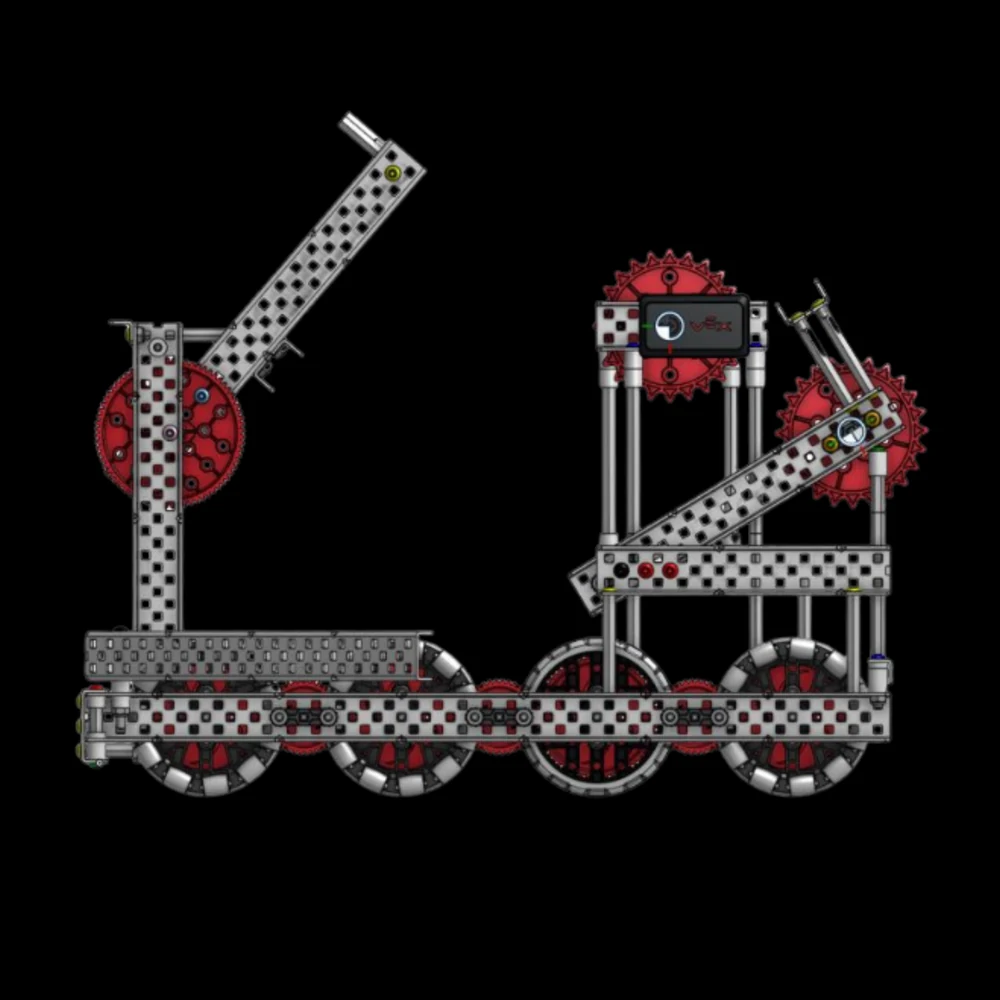
- Goal
- Build a competition robot that remains maneuverable and reliable under match loads.
- My contribution
- Co-captain, Team 1356; mechanical and autonomous development, 2021–2024.
- Result
- Five elevation trials recorded: 0.8, 0.4, 0.3, 0.3, and 0.5 seconds.
- Role
- Co-captain, Team 1356
- Domain
- Robotics · controls
- Status
- Worlds qualifier
- Signal
- Top 7% globally
Images & documentation
Inside the project.
Design loop & tradeoffs
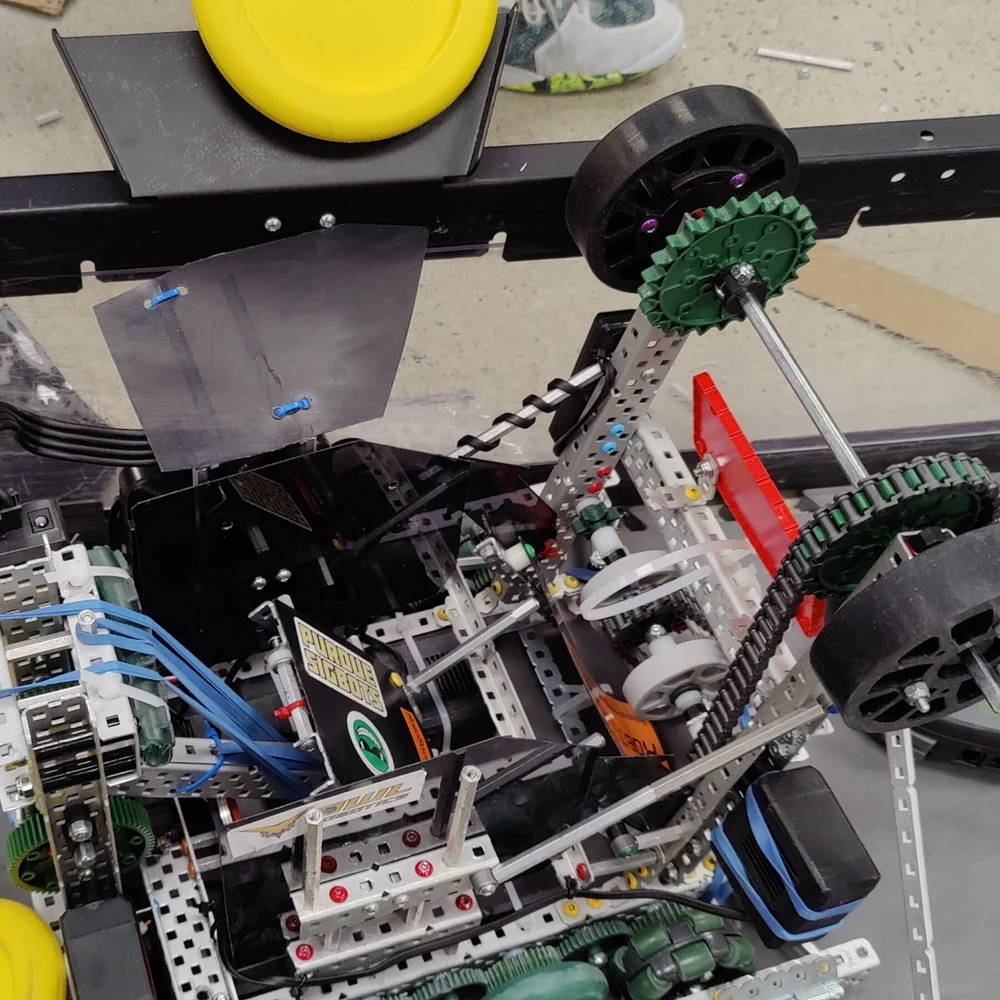
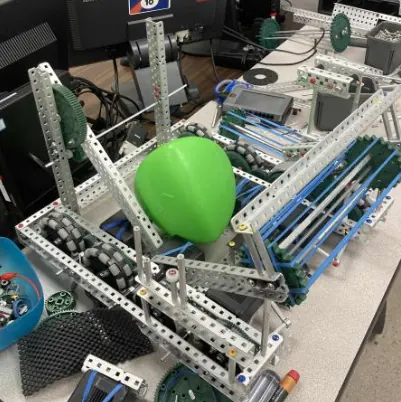
Problem definition and concepts led to a weighted decision matrix, CAD/build, subsystem tests, and competition feedback. Driver testing favored an all-omni drivetrain because the earlier traction arrangement constrained turning. The choice prioritized maneuverability in the actual game.
Failure → redesign
Drive stalling and gear/axle failures under high load prompted changes to bearing support, unsupported shaft spans, gearing, and structural load paths. The redesign addressed deflection and load transfer instead of treating motor power as the only variable.
Elevation mechanism
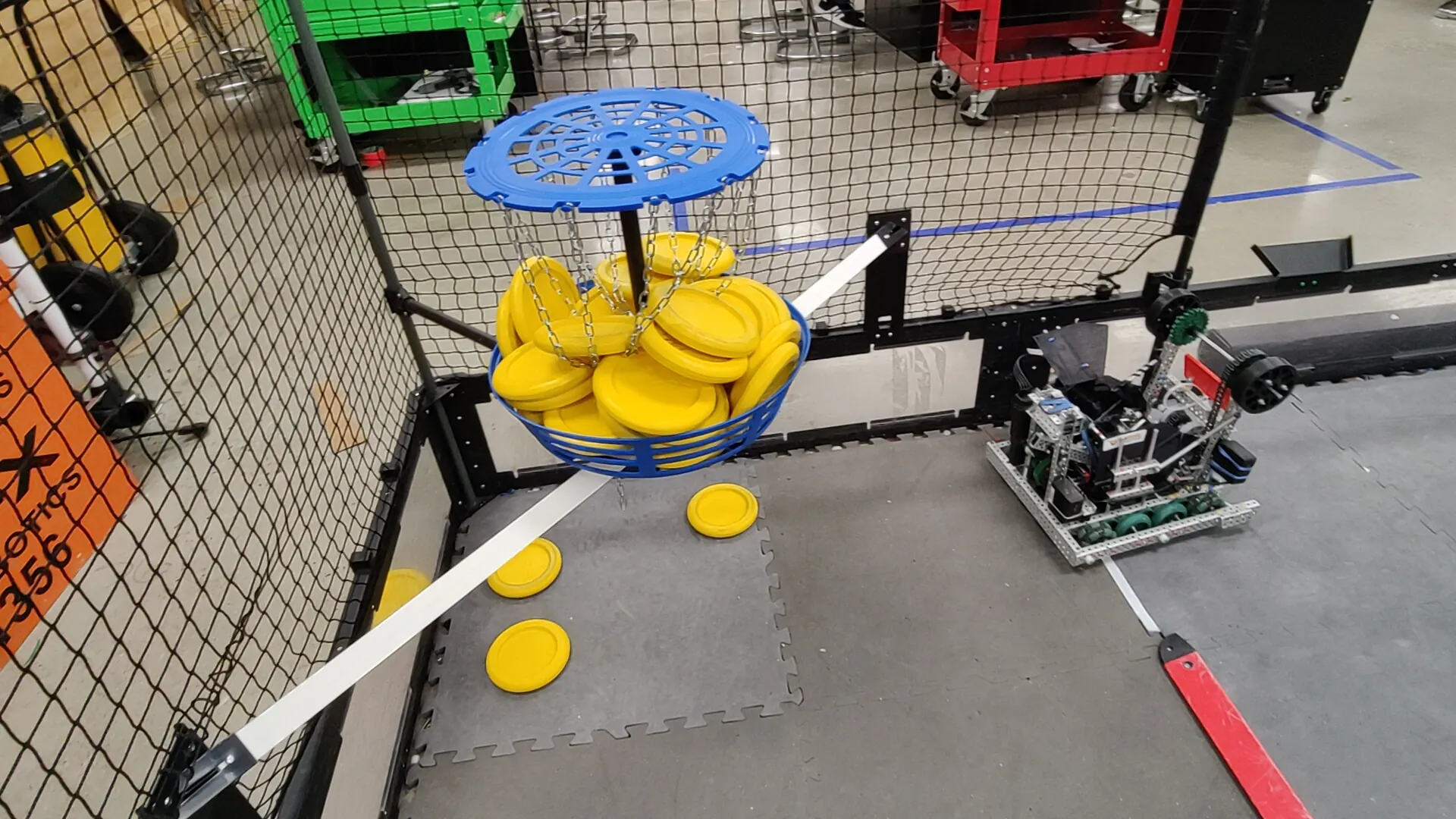
The pneumatic mechanism operated at 70 PSI. Linkage geometry, friction, moment arm, and center-of-gravity placement affected useful elevation force. After the initial mechanism missed the speed target, the team shifted mass forward and iterated the geometry.
Measured trials
| Trial | Time (s) |
|---|---|
| 1 | 0.8 |
| 2 | 0.4 |
| 3 | 0.3 |
| 4 | 0.3 |
| 5 | 0.5 |
The source records 174 driver skills, 154 autonomous skills, an 83% qualification win rate, a Design Award, and two VEX Worlds appearances. These are reported team results, separate from the mechanism trials.
Documentation limits
The drivetrain notes list a 360 RPM drive, 600 RPM cartridges, and 3:4 external gearing. Those figures require reconciliation before deriving wheel speed or torque; no calculated drivetrain result is presented here. The five elevation trials show observed cycle times, not a reliability distribution.
Contributors
Skills
Project record: Engineering portfolio, pp. 11
Explore more of the work.
← Back to Selected Builds