Make-a-thon 2026 · 24-hour build
SafeByte
A bracelet with a camera that tells you what’s in your food.
Explore the engineering ↓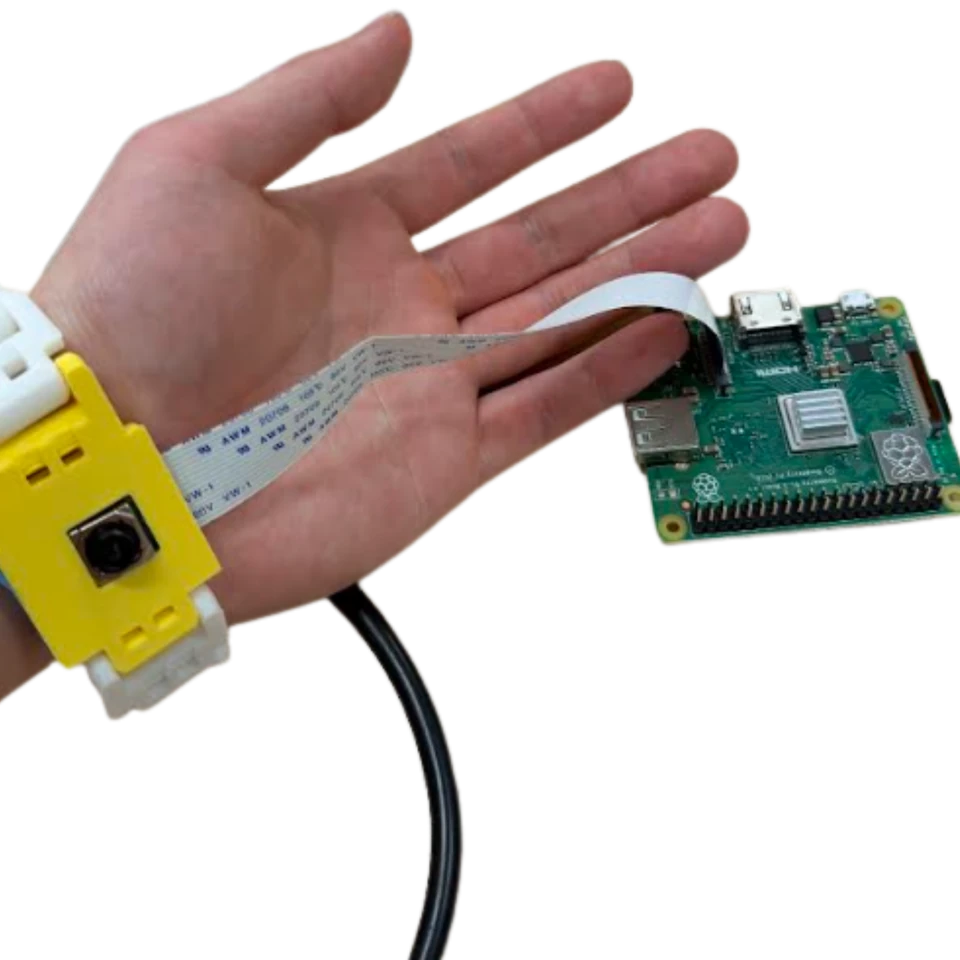
- My role
- Two-person team · built together in 24 hours
- Status
- Working prototype · not a safety device
- Focus
- Raspberry Pi · camera · web interface
What we built
In 24 hours we built a 3D-printed bracelet with a camera, wired it to a Raspberry Pi, and connected it to a web app that returns nutrition and ingredient information from a scan.
- 01
Capture
A camera on the bracelet, wired to a Raspberry Pi.
- 02
Transmit
The Pi sends the image over the internet.
- 03
Interpret
A language model and public food databases work out what it is.
- 04
Present
The web app shows the result.
The prototype
Inside the work.
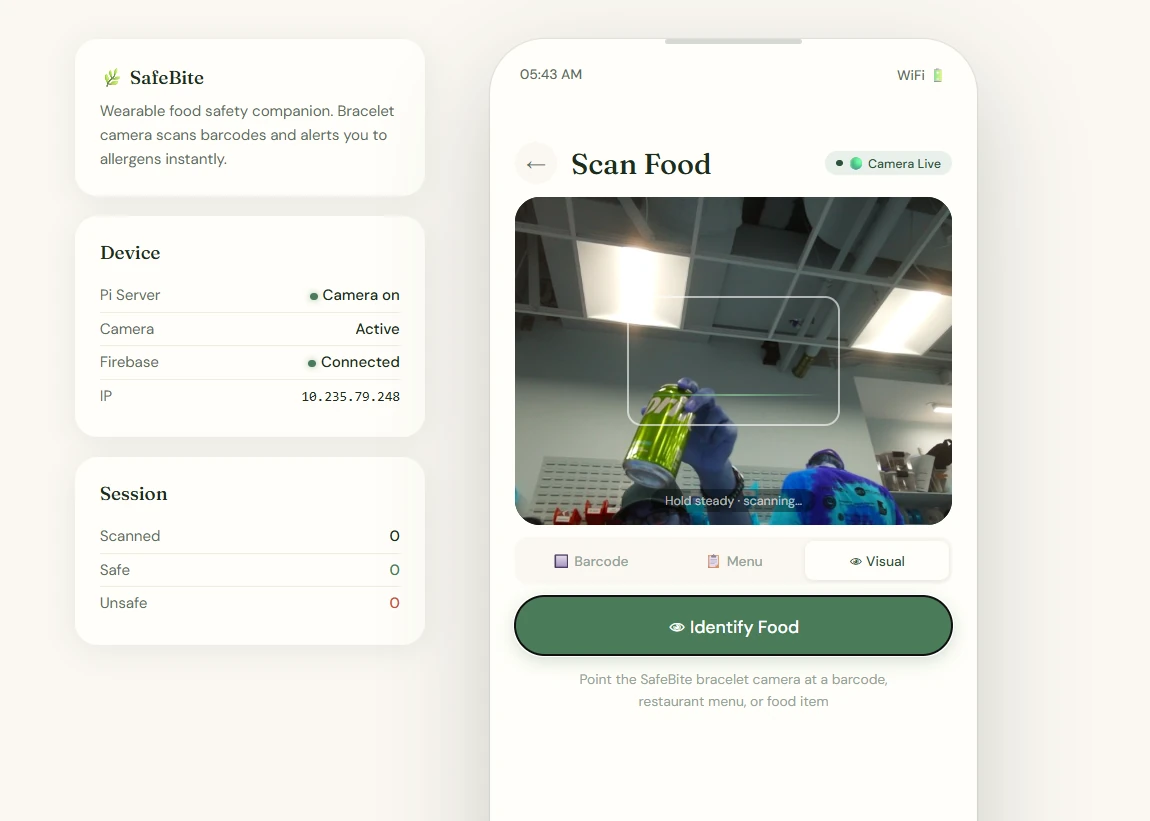
Device status, the live camera view, and the scan button.
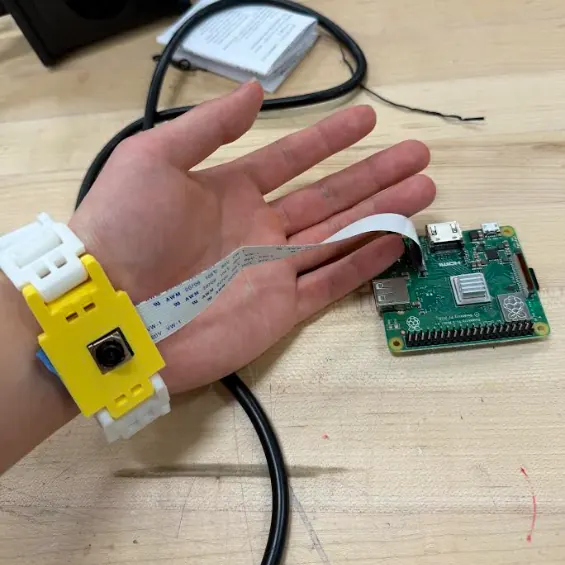
3D-printed and adjustable, with the camera mounted on top.
Demo
Prototype walkthrough
A walkthrough of the prototype working. It shows that it works, not how accurate it is.
Press play to load the video.
| Component | Estimate |
|---|---|
| Bracelet filament | $2–3 |
| Camera | $6–25 |
| Raspberry Pi | $20 |
| Listed component total | $28–48 |
One full path, first
We used parts we already understood: a Raspberry Pi and a small camera, with the camera on a 3D-printed adjustable bracelet and a wire running back to the Pi. That isn’t small or wireless, but it let us build the whole chain, from photo to answer, inside the time limit. Size, battery, wireless and comfort are problems for the next version.
What it cost
$2–3 of filament, $6–25 for the camera, $20 for the Pi: $28–48 in parts. That’s what the prototype took, not what a product would cost. Labor, a real enclosure and connectivity aren’t in it.
What it can’t claim yet
The demo shows it working. It doesn’t show how often it’s right. We never measured accuracy on real food packages, how reliably it catches allergens, or how long a scan takes. So nobody should use it to decide whether food is safe for an allergy.
Next version
A smaller controller, Bluetooth instead of a wire, and personal settings. Before any of that, I’d build a test set of real labels and packages and keep every wrong or unsure answer, so we know how good it actually is.
Sources
Technical records.
Continue exploring.
← Back to Selected Builds