Fall 2026 · High-power rocketry
Rocket
My first high-power rocket. It flew well. It didn’t come back.
Explore the engineering ↓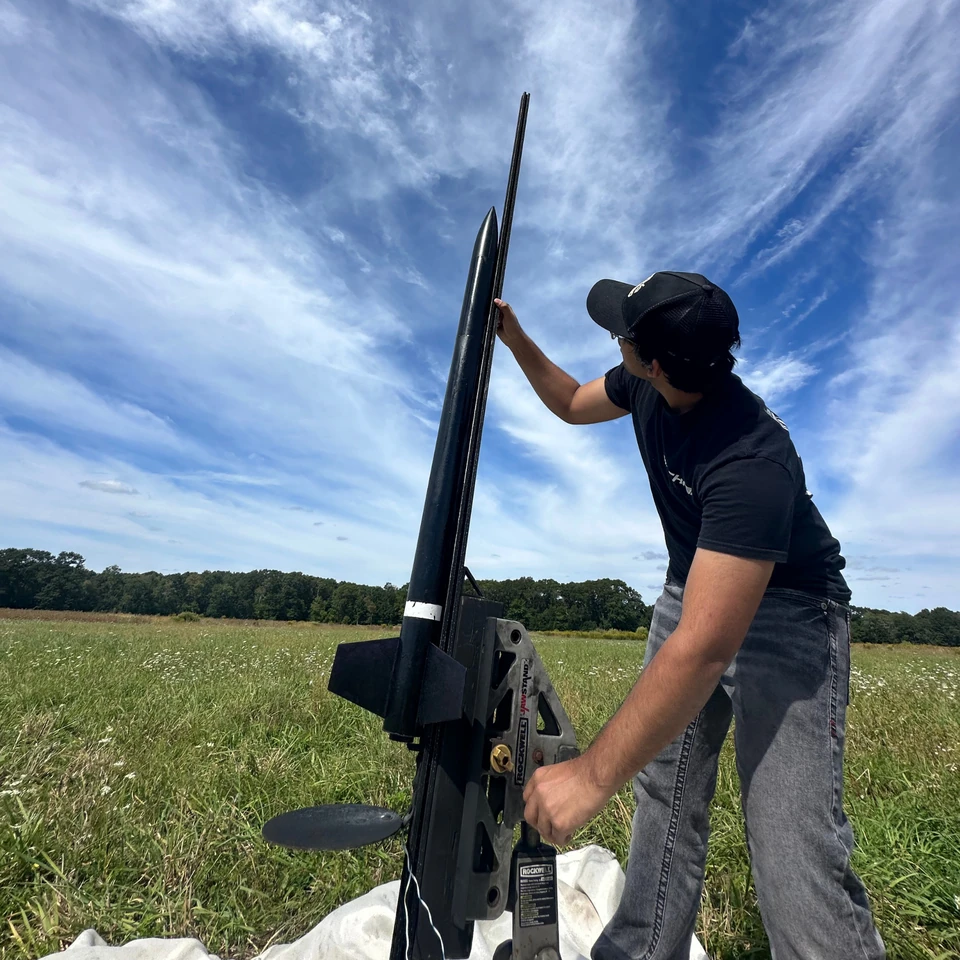
- My role
- Flew AeroEagle-1 · MechaEagles founder & project manager
- Status
- Launched September 19, 2026 · not recovered
- Motor
- AeroTech H100W (H class)
What happened
Three of our team’s rockets flew that day and two came back. Mine went up clean, but the parachute didn’t deploy correctly, and we never found it.
- 01
Prepare
Assemble the rocket and write down exactly how it’s set up.
- 02
Predict
Model the flight in OpenRocket before trusting it.
- 03
Launch
Fly it and record what actually happened.
- 04
Investigate
Work out what went wrong and what to check next time.
Launch day
Inside the work.
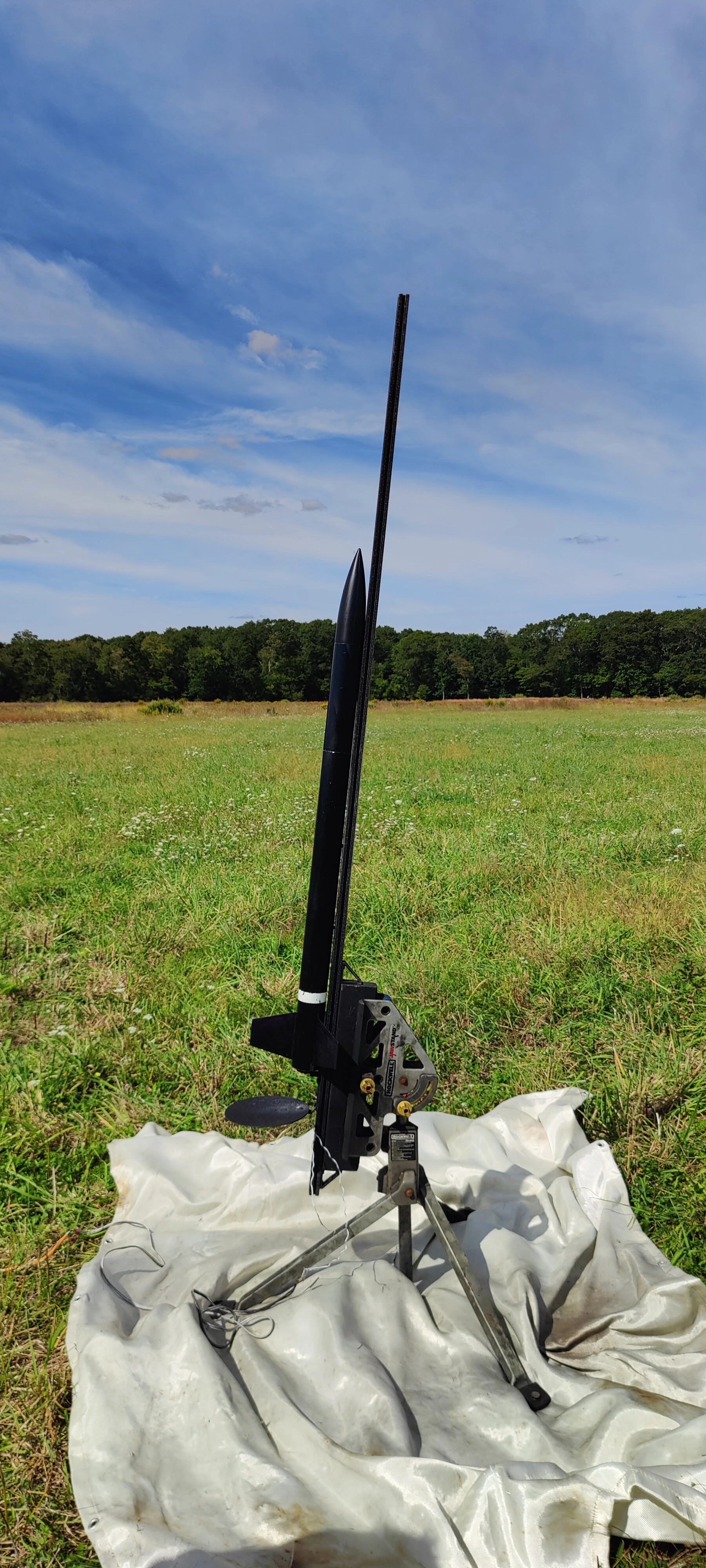
AeroEagle-1 on launch day, before flight.
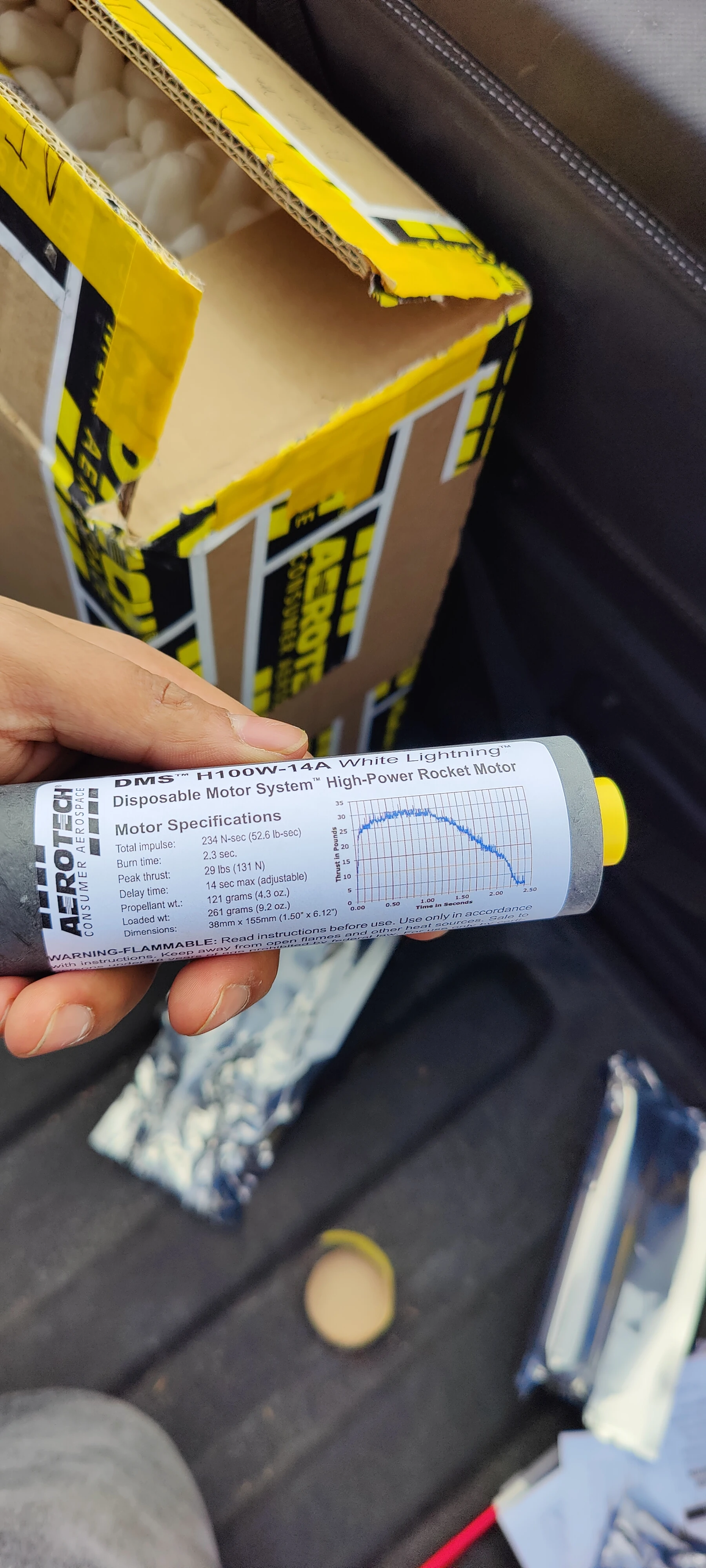
Launch-day prep before the rocket went to the pad.
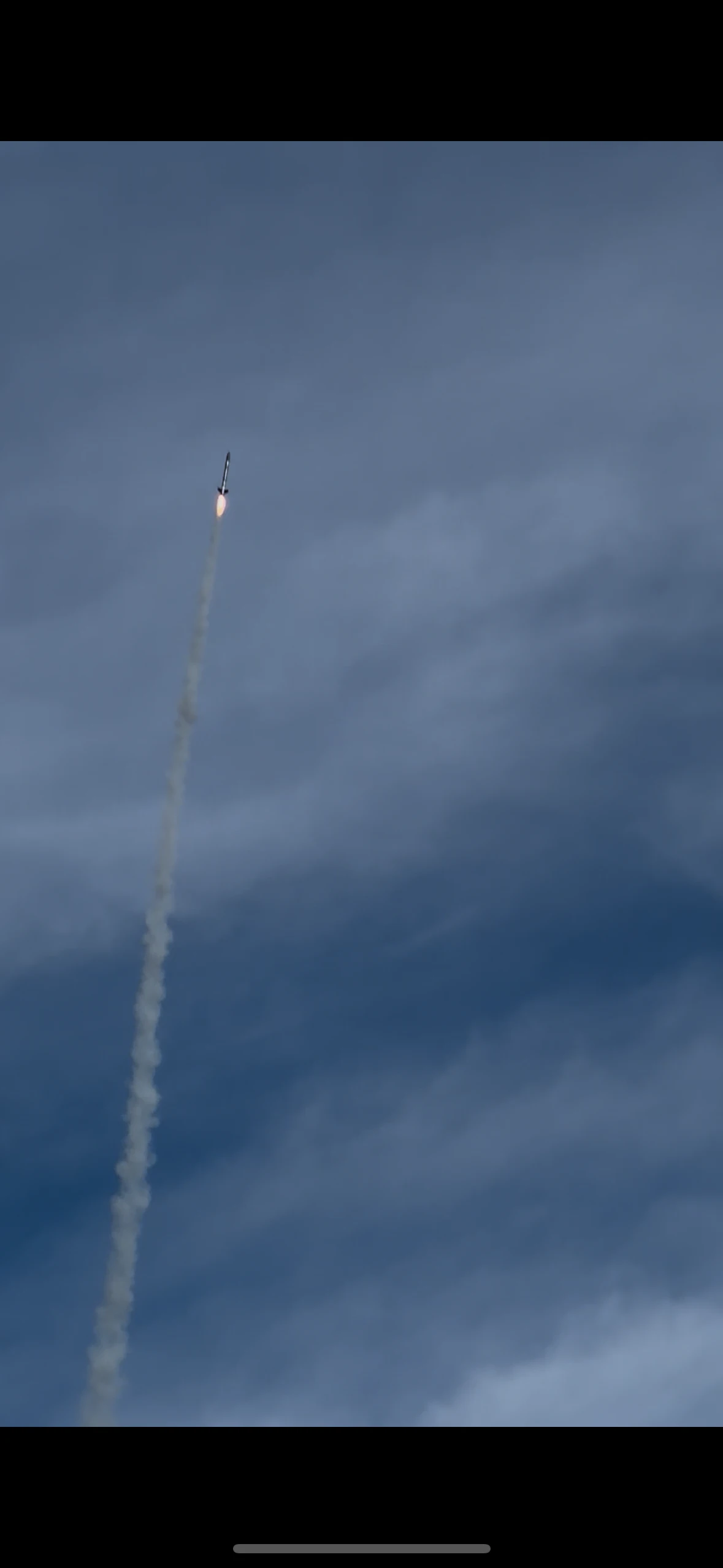
A frame from the launch video: the motor burning on the way up.
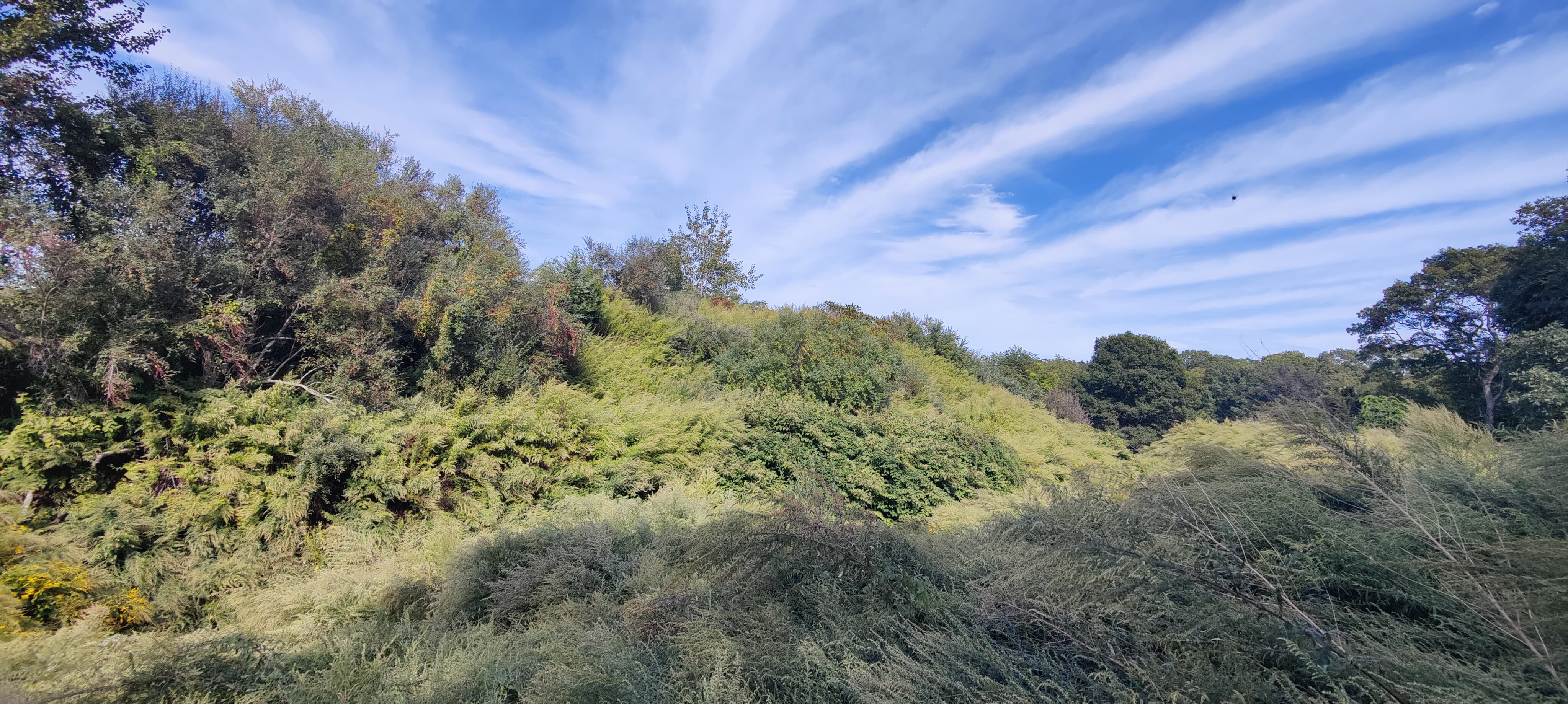
Open field, tree line all around. That matters a lot once you’re searching for a rocket.
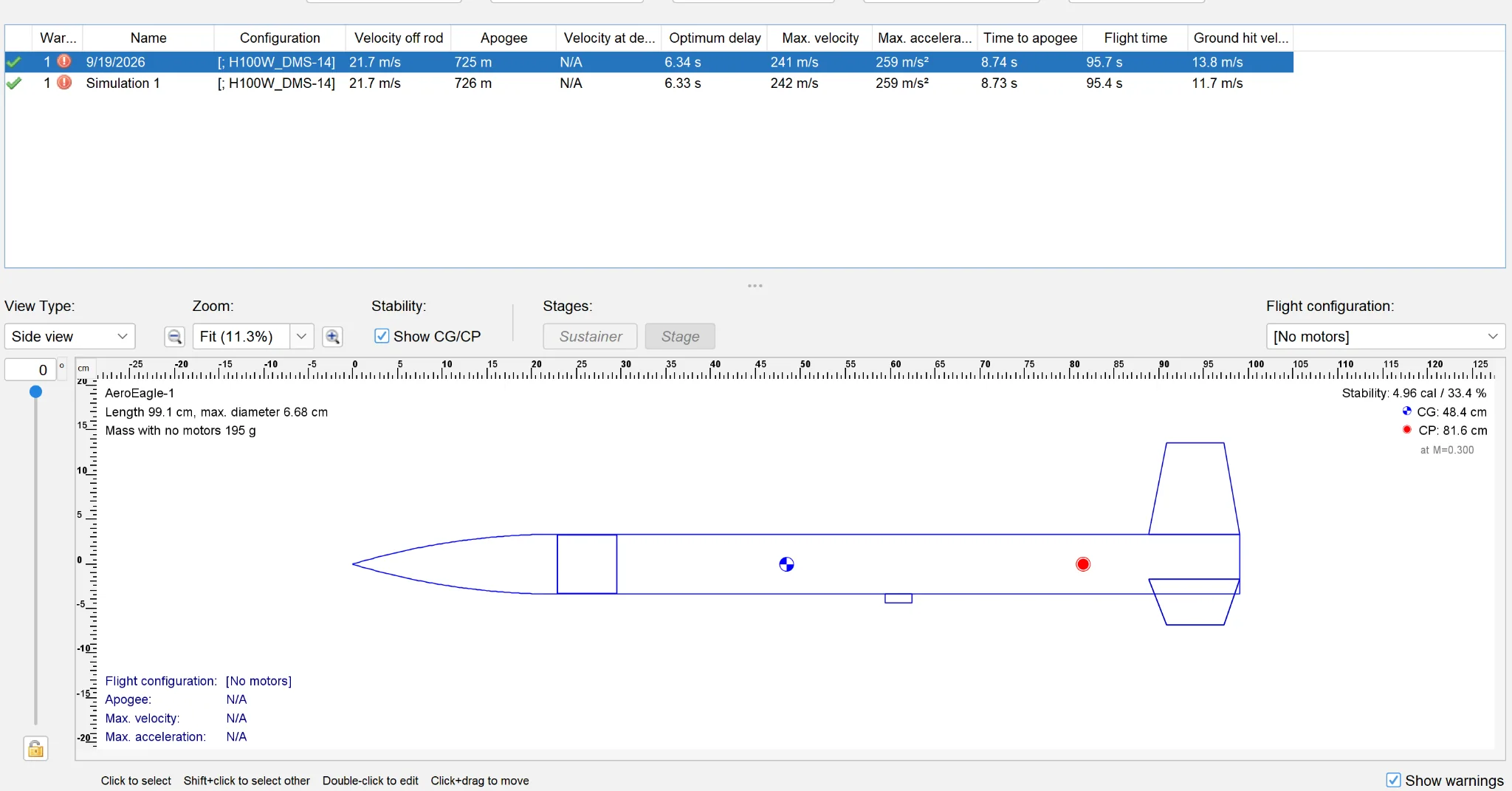
My OpenRocket output from before the flight. Read the notes below on why its numbers were off.
Launch
Launch footage
Launch-day footage of the ascent. The descent isn’t on video.
Press play to load the video.
| Value | Where it comes from | |
|---|---|---|
| Mass in my model | 0.456 kg | OpenRocket, no recovery gear included |
| Mass on the pad | ≈0.889 kg | Recalled, not weighed |
| Predicted apogee | 725 m | OpenRocket, at the model’s mass |
| Predicted peak speed | 241 m/s | OpenRocket, at the model’s mass |
| Ascent | Clean | Observed |
| Recovery | Not recovered | Observed |
The flight
AeroEagle-1 flew on an AeroTech H100W motor on September 19, 2026, at our team’s first high-power launch. It left the rail straight and climbed clean. The parachute didn’t deploy correctly, and after searching the field we never found it.
A teammate earned their Level 1 certification that day. That one is theirs, not mine.
My model was wrong before it flew
OpenRocket predicted 725 m and 241 m/s, with apogee at 8.74 s. Looking back at the file, the model had no recovery hardware in it and weighed 0.456 kg. The rocket on the pad was closer to 0.889 kg. I remember that number; I never actually weighed it.
That’s almost twice the mass on the same motor. The motor delivers a fixed total impulse, so nearly double the mass means roughly half the speed at burnout, and since height goes with speed squared, a much lower apogee. The real flight was nowhere near 725 m. Without an altimeter log I can’t say what it actually reached.
Why the parachute might have failed
The model also stores a 14 s ejection delay, while OpenRocket’s best delay for that (too light) model was 6.3 s. A heavier rocket peaks even sooner. If anything like a 14 s delay flew, the chute would have come out long after apogee, with the rocket already falling fast, which is a common way to lose a recovery.
I can’t confirm what delay actually flew, and without the rocket I can’t inspect anything. So this is the most likely explanation I have, not a proven one.
Next time
Weigh the rocket and find its center of gravity with everything installed, and put those into the model. Choose the ejection delay from that model, not the default. Ground-test the deployment and practice packing the chute. And fly a tracker, so a failure leaves something to look at.
What’s next for the team
MechaEagles Aero has a 2027 proposal for the next vehicle. That’s a plan, not something that has flown.
Continue exploring.
← Back to Selected Builds