2026 · Planetary science · Image processing
Jupiter
Looking for lightning on Jupiter in Cassini images, and being careful about what counts as found.
Explore the engineering ↓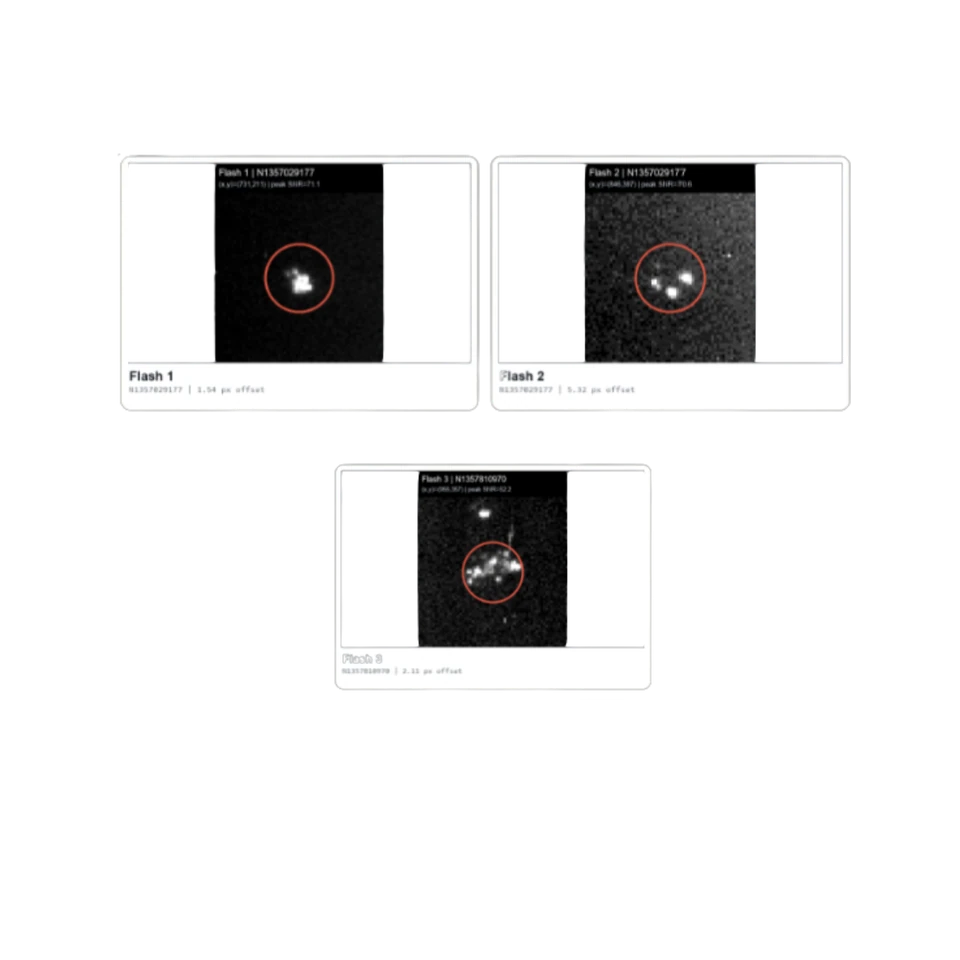
- My role
- Built the detector, ranking and review workflow
- Status
- All 6 known flashes recovered · no new ones confirmed
- Focus
- Scientific imaging · computer vision · validation
Result
Across 221 images from nine date windows, the detector found all six published lightning flashes within 8 px. It also flagged 106 candidates for review. Those are a to-do list, not discoveries.
- 01
Detect
Normalize each image and subtract the planet’s smooth glow.
- 02
Filter
Measure bright spots and flag the ones that look like artifacts.
- 03
Rank
Link spots across nearby frames and rank them for review.
- 04
Review
Check against known flashes and record a human decision.
The search
Inside the work.
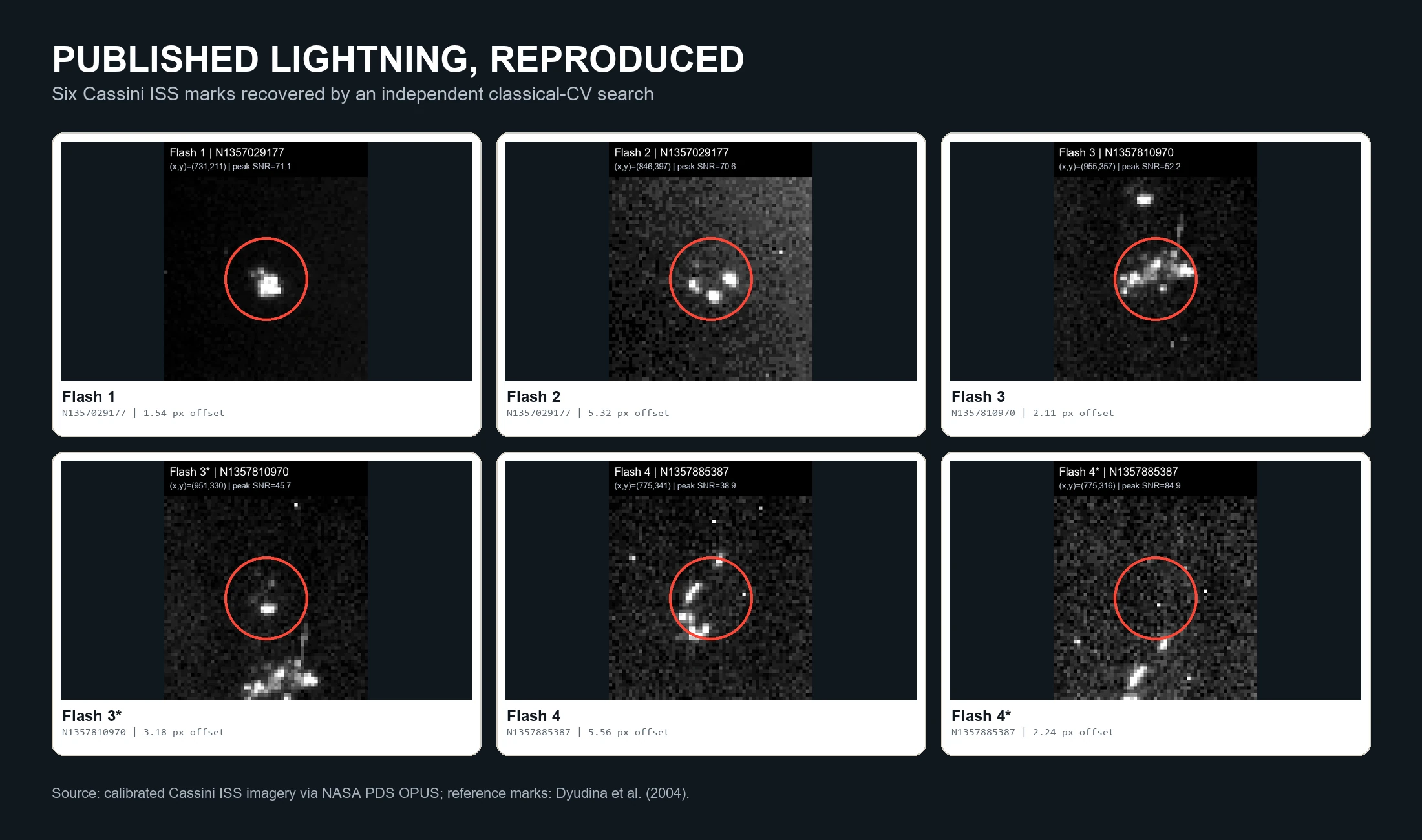
The six published lightning flashes I used to check the detector.
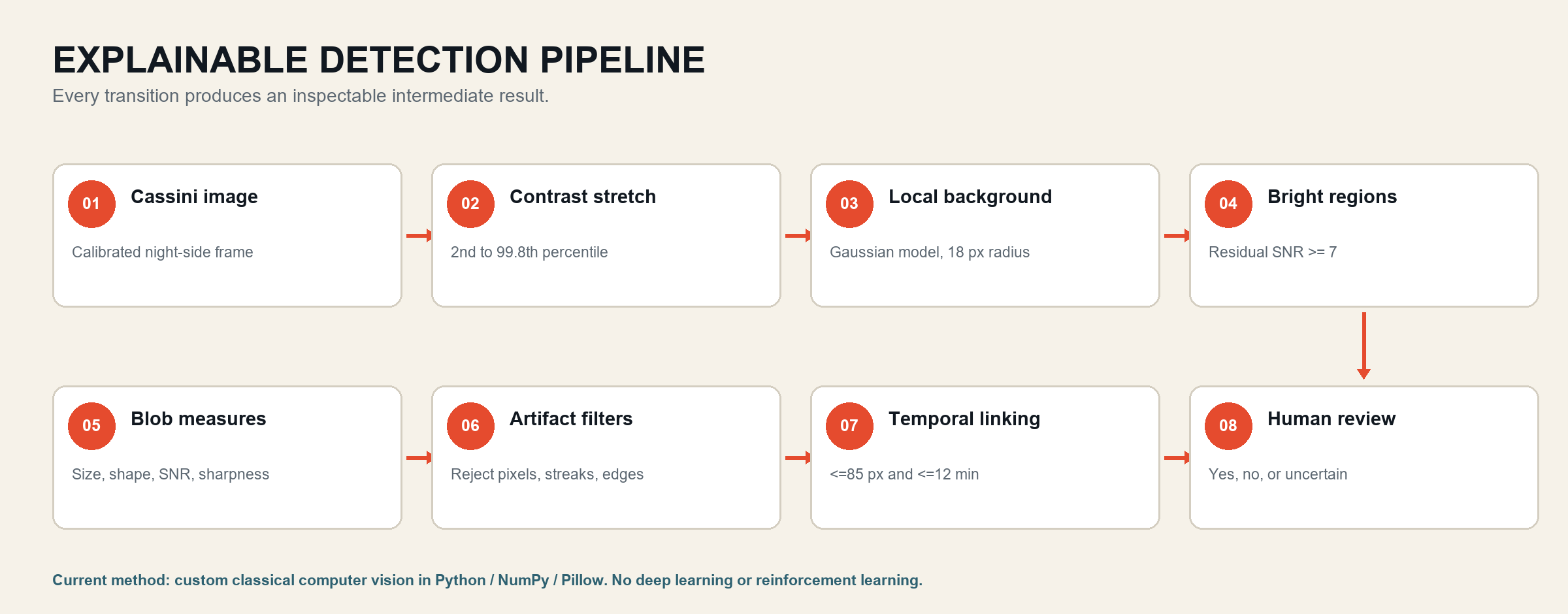
Image processing and region measurements. No neural network.
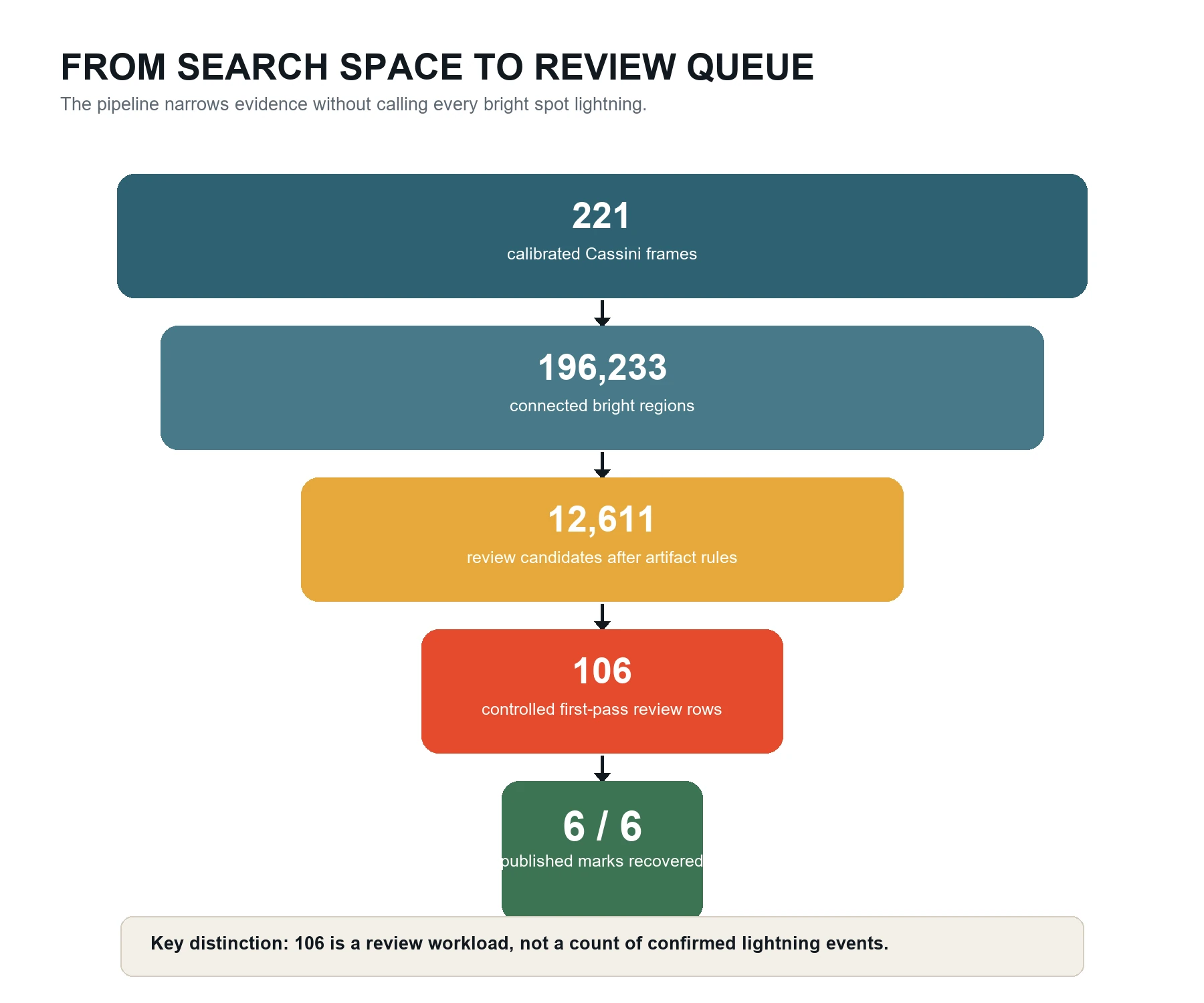
Raw spots, filtered candidates and review rows are different stages, so they get different counts.
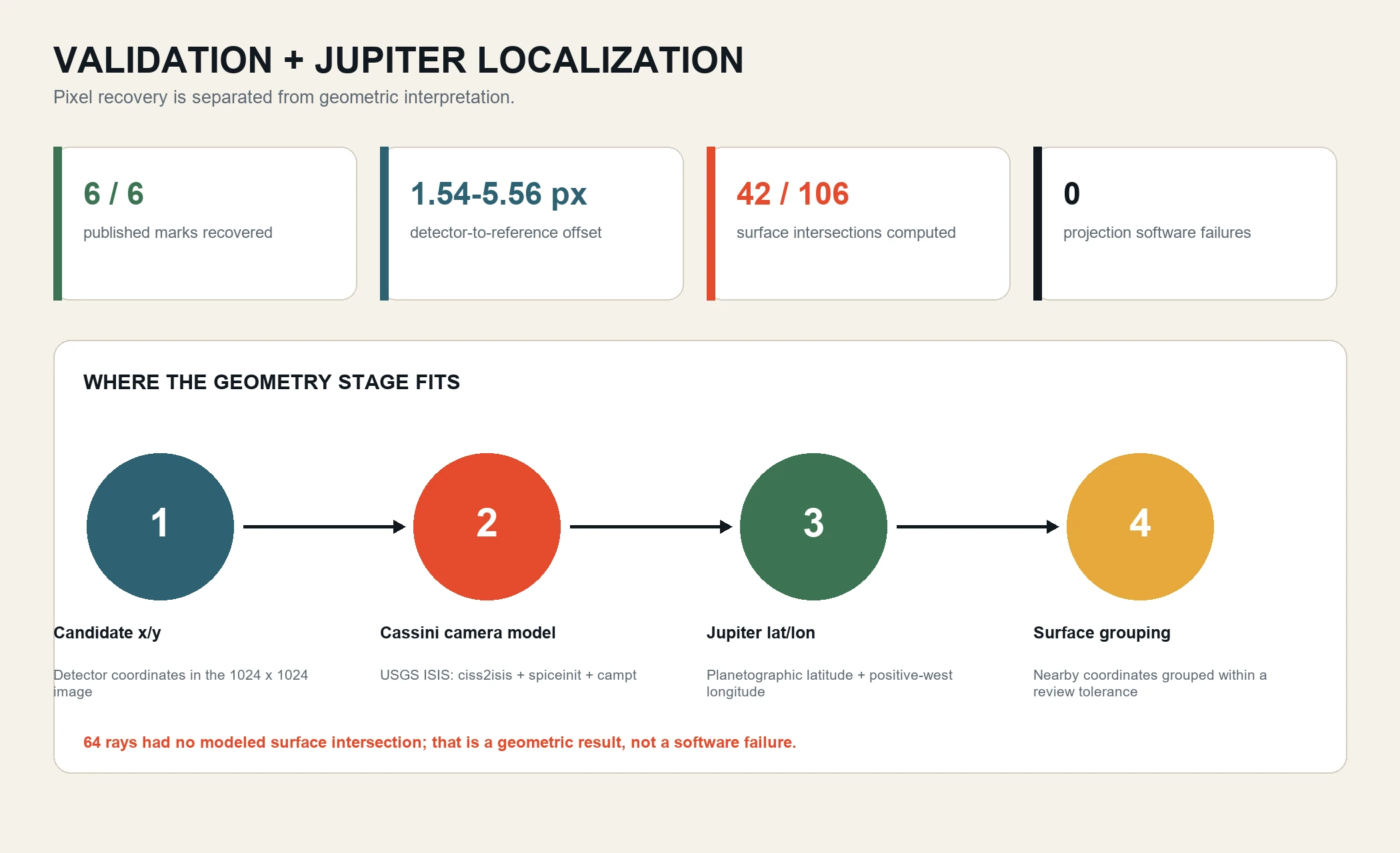
Localization checks and geometry work constrain the scientific interpretation.
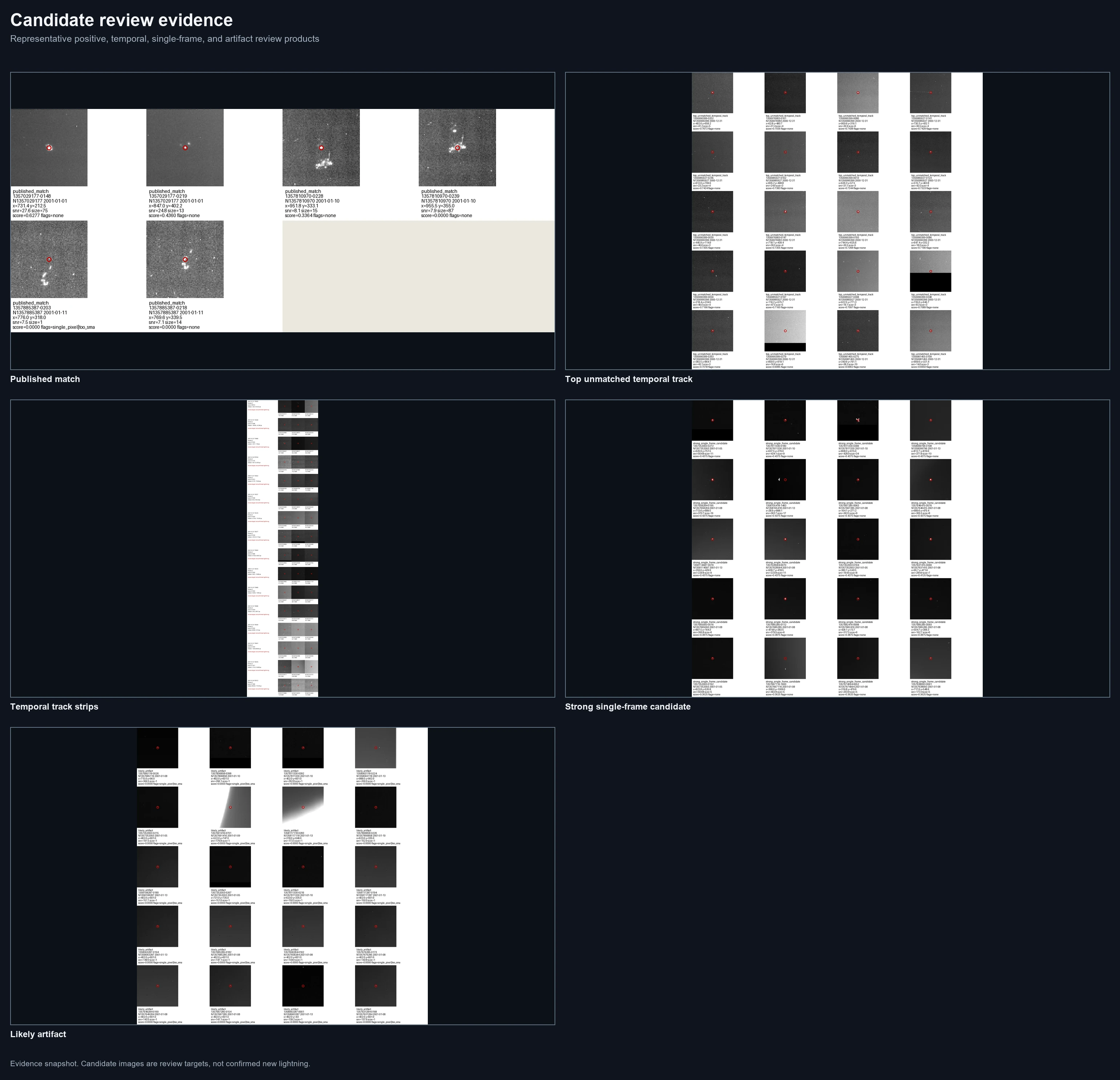
Candidates that didn’t match anything known, plus some artifacts. None of them is a discovery yet.
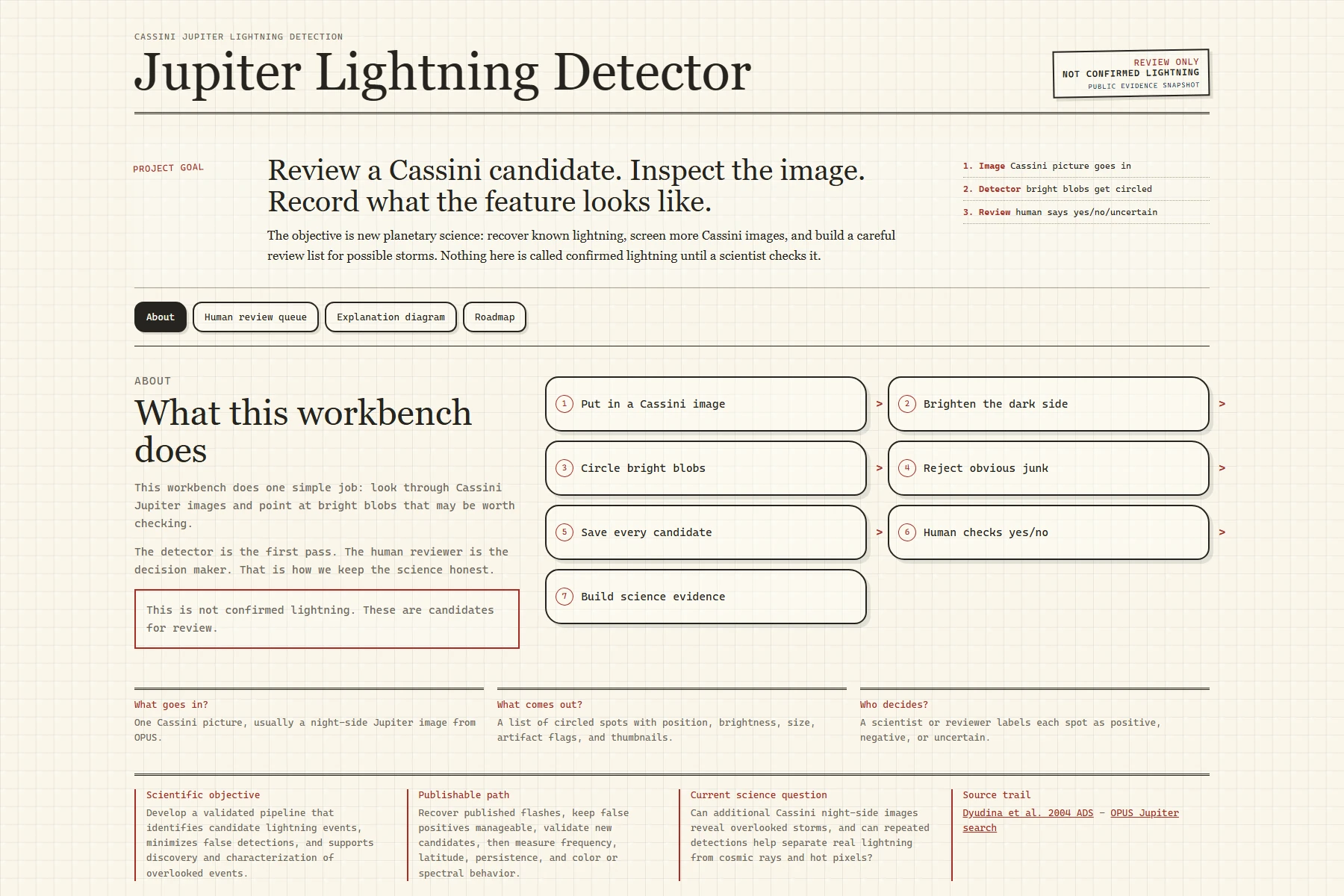
Where each candidate gets a human decision. No labels have been accepted yet.
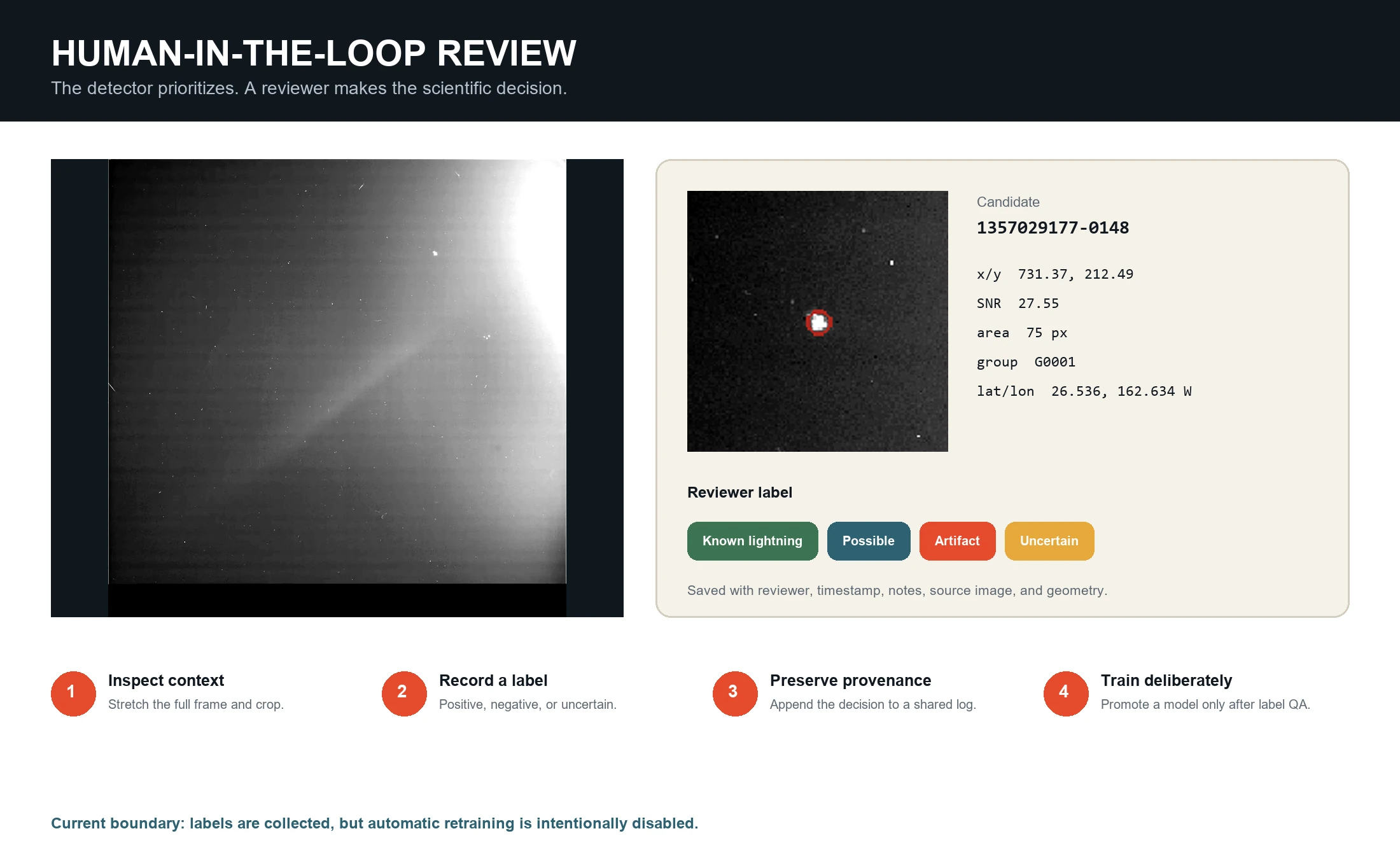
Labels and a frozen benchmark have to exist before a learned model is worth comparing.
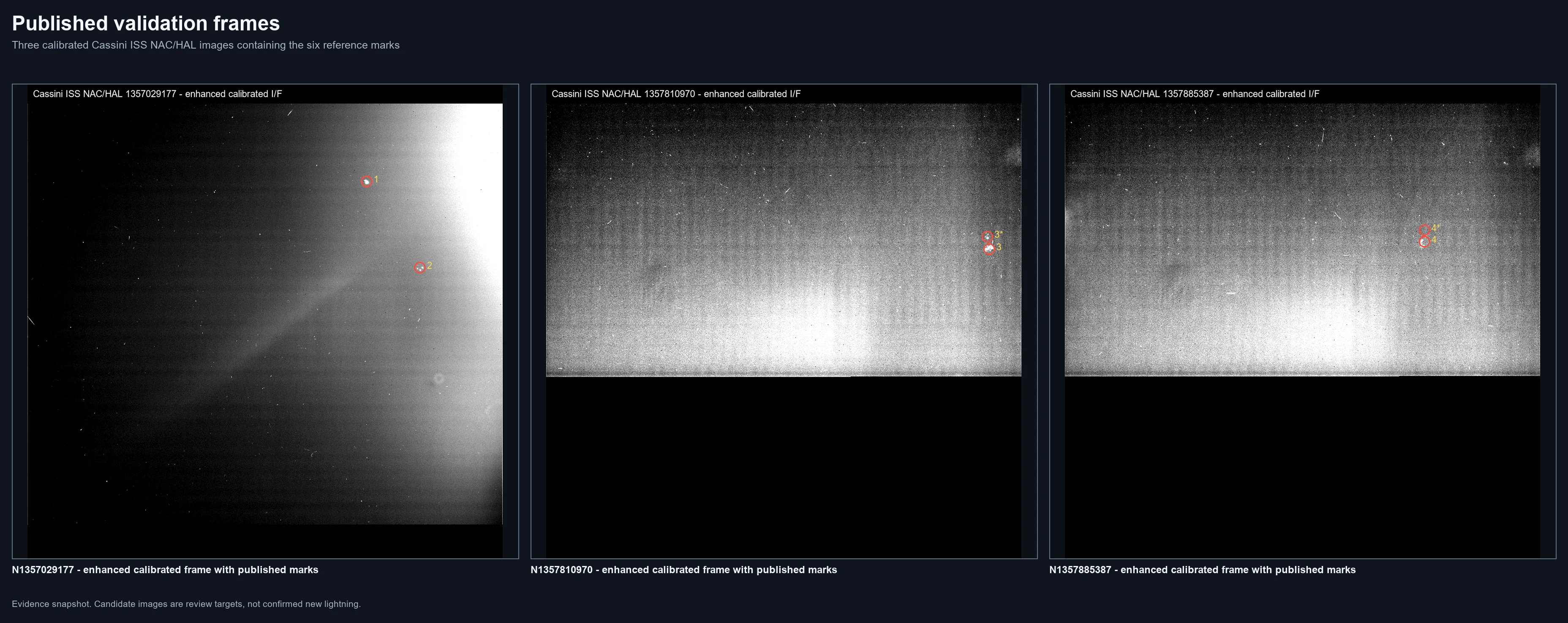
Full-frame context shows where the six published validation marks occur.
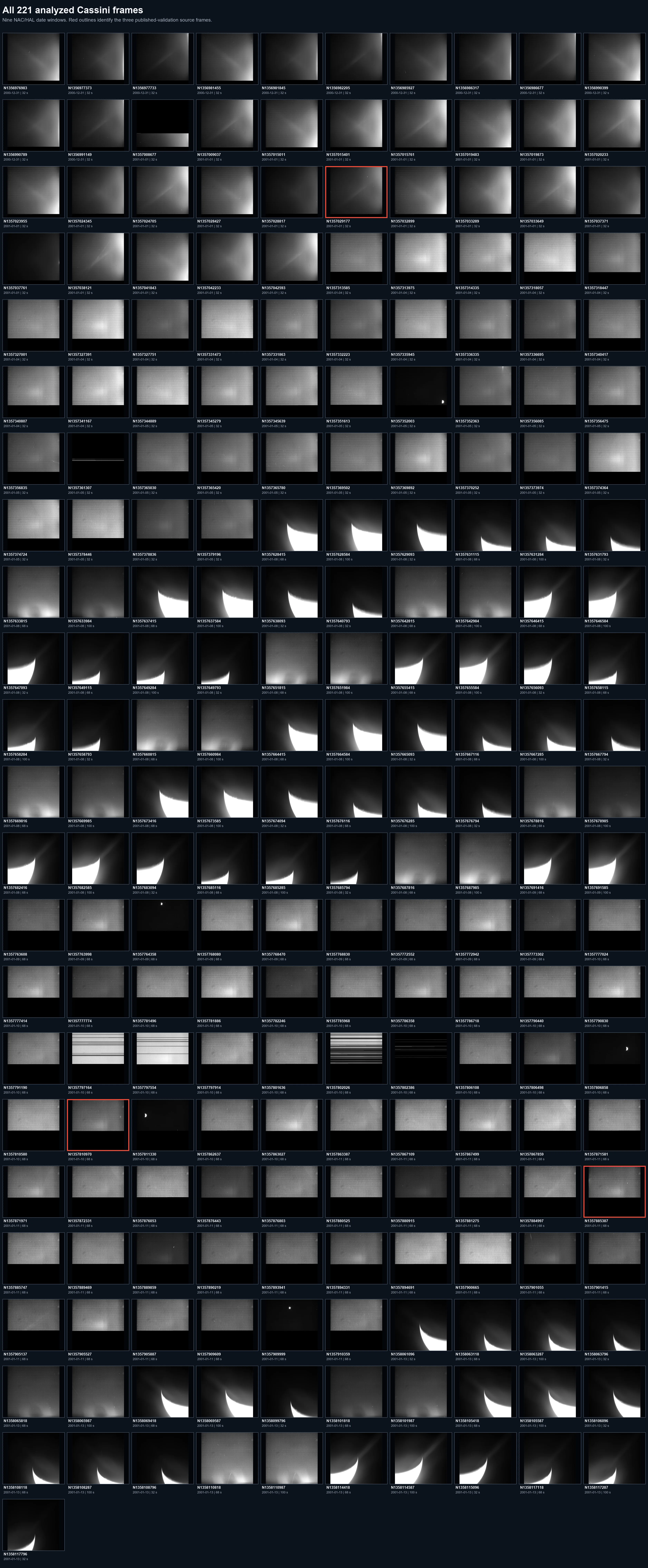
Every image I analyzed, not just the good ones.
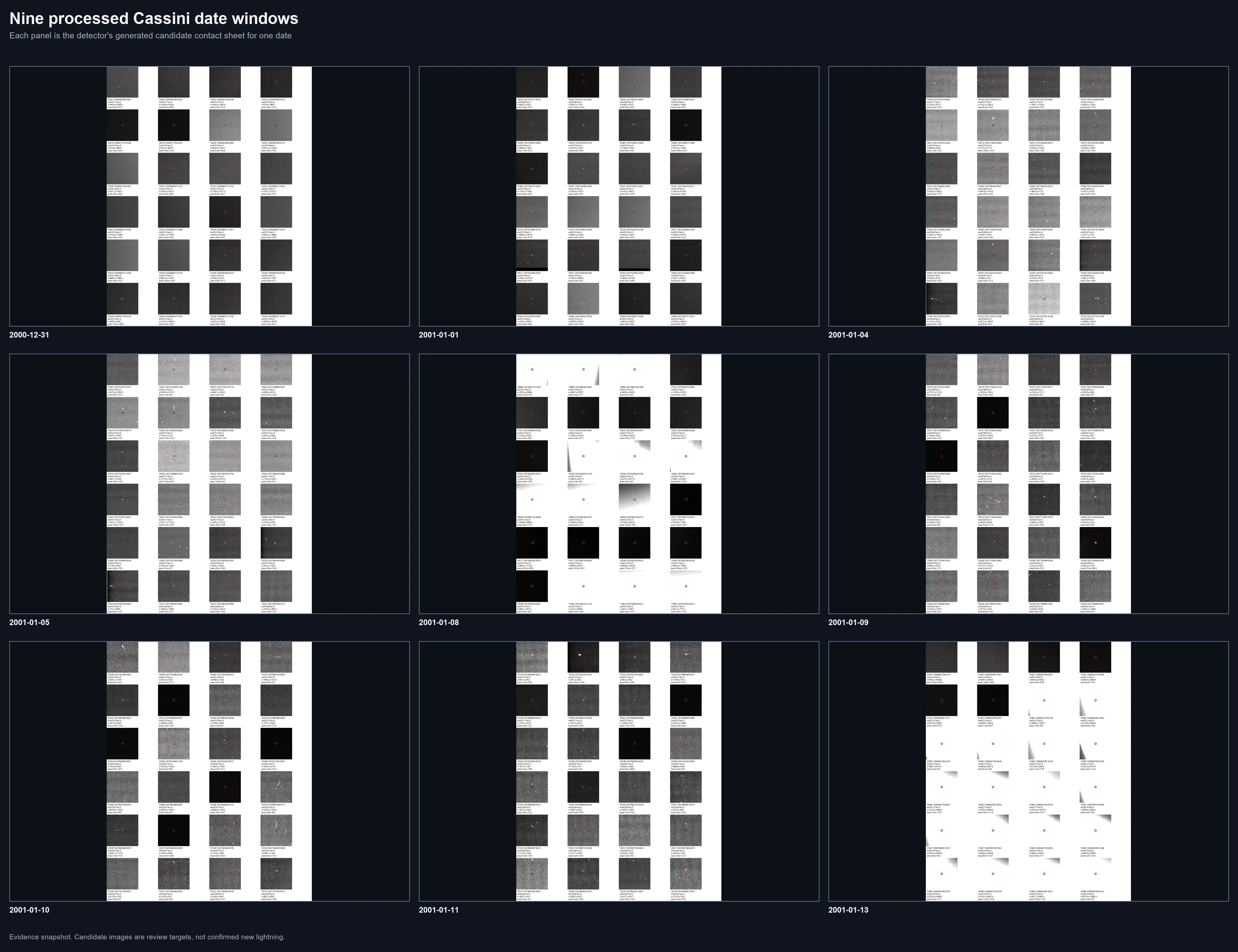
Grouped by date, to show how much ends up in review.
| Stage | Count | Meaning |
|---|---|---|
| Calibrated images | 221 | Nine date windows |
| Bright regions | 196,233 | Broad first-pass detections |
| Filtered candidates | 12,611 | Passed artifact filters |
| Prioritized rows | 106 | Human review packet |
| Known marks recovered | 6 / 6 | Within 8 px; not overall accuracy |
How the detector works
It runs on calibrated Cassini ISS images in Python with NumPy and Pillow. Each image is scaled between its 2nd and 99.8th percentile, then a Gaussian blur (radius 18) is subtracted to take out the planet’s smooth glow and leave only small bright spots.
Noise is estimated as 1.4826 × the median absolute deviation. Unlike a standard deviation, that isn’t dragged up by the bright spots you’re looking for. Pixels 7× above the noise are grouped into connected regions, and each region gets measured: position, area, peak and total signal, sharpness and elongation. To become a candidate, a region needs at least 3 pixels, a peak above 8× the noise, and no artifact flags.
From 196,233 to 106
The first pass found 196,233 bright regions. Artifact filters cut that to 12,611. Detections within 85 px and 12 minutes of each other are then linked, since a real flash can show up in more than one frame, and each one is scored on persistence, motion, diffuse shape, signal and an artifact penalty.
That score only sets the review order. It isn’t a probability that something is lightning.
Checking against known flashes
All six published flashes were recovered within 8 px, with offsets between 1.54 and 5.56 px. That shows the detector can find real lightning. It doesn’t measure how often it’s wrong across all 221 images.
Why nothing is a discovery yet
A candidate that matches nothing known still needs a person to look at it, evidence in more than one frame, and a geometry check. Only 42 of the 106 have a computed position on Jupiter; for the other 64 the line of sight misses the planet, and I left them without made-up coordinates. No human labels have been accepted yet.
Next
There’s no neural network here, on purpose. Training one would need accepted positive and negative labels, a frozen benchmark and versioned data, and then it would have to beat this simple detector to be worth it.
Sources
Technical records.
Continue exploring.
← Back to Selected Builds